

A Commentary That Preserves the Early Voices
When we open Tafsir al-Tabari, we enter a conversation that began long before its author. Abu Ja‘far Muhammad ibn Jarir al-Tabari gathered explanations attributed to the Companions, their students, and other early authorities, preserving both their words and the routes through which those words reached him. His work became a foundational reference for later Qur’an commentators.
The book’s fuller Arabic title is Jami‘ al-Bayan ‘an Ta’wil Ay al-Qur’an. Its concern is the explanation of the Qur’an, verse by verse. Al-Tabari does more than assemble devotional reflections: he examines what a passage means, how Arabic supports that meaning, and which transmitted interpretations deserve preference. [1]
One of its distinctive features is the presence of chains of transmission. These chains allow specialists to examine the sources behind an explanation. Their inclusion does not make every individual report authentic. A reader must distinguish between al-Tabari recording a narration and al-Tabari explicitly choosing an interpretation as the strongest.
How Al-Tabari Weighs an Interpretation
His discussion of the opening of Al-Fatihah illustrates the book’s range. Alongside transmitted explanations, he considers the meanings of words, their grammatical relationships, and the ways Arabs use them. The Qur’an was revealed in Arabic, so understanding its language is part of understanding its guidance rather than an optional literary exercise. [2]
Elsewhere, al-Tabari considers variant Qur’anic readings, legal implications, and disagreements among earlier interpreters. Sometimes different explanations describe compatible aspects of the same meaning. Sometimes he judges that one reading of the evidence is stronger. This combination of preservation and evaluation makes the commentary more than an archive.
For us, that method encourages patience. Encountering several interpretations should lead us to ask where they came from and how they relate to the verse. It should not tempt us to select whichever interpretation best supports an opinion we already hold. Learning includes allowing evidence to correct our first impression.
His preferred conclusion should be read alongside the alternatives he records. That comparison often reveals which linguistic or transmitted consideration actually makes the difference in his judgment.
Why This Book Still Matters
Al-Tabari’s importance lies partly in the early material he preserves. Later commentaries frequently return to the scholarly inheritance collected here. Someone studying the history of a particular interpretation can often discover important earlier voices in his pages, even when those voices are difficult to consult independently.
The complete work is demanding. Its chains, linguistic discussions, and detailed disagreements reward readers who have some grounding in Arabic and the Qur’anic sciences. Beginners can still benefit through a dependable translation, selected passages, or lessons with a qualified teacher. A shorter modern edition should be identified clearly as an abridgment.
An especially useful reading practice is to choose a short passage, identify al-Tabari’s main explanation, and then notice the evidence he gives for it. We need not master every technical discussion at once. The immediate lesson is that understanding revelation calls for attention, inherited knowledge, and responsibility.
Tafsir al-Tabari reminds us that sincere reflection and careful scholarship belong together. The Qur’an addresses our hearts, but speaking about its meaning also requires discipline. This book helps us appreciate the generations who worked to preserve that discipline and pass it on.
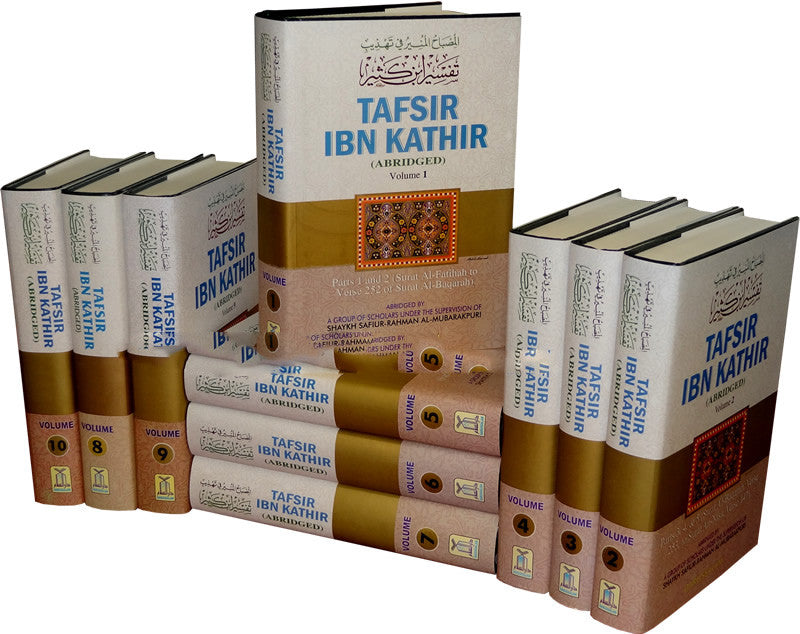
Explore Tafsir Ibn Kathir at HilalPlaza.
References