

An Early Meeting of Hadith and Law
Al-Muwatta’ is one of the earliest surviving major works in which prophetic reports and legal understanding appear together in an organized form. Compiled by Malik ibn Anas, the imam of Madinah, it preserves hadith alongside statements from the Companions, judgments of later authorities, and Malik’s own legal comments.
This mixture is central to the book’s identity. It should not be described as though it were simply a smaller version of Sahih al-Bukhari. Its arrangement shows how transmitted guidance, inherited learning, and legal practice interacted in the scholarly world of Madinah. That makes it important for both hadith study and Maliki jurisprudence. [1]
The title is often translated as The Well-Trodden Path. The work circulated through more than one transmission from Malik, so editions and recensions can differ. A reference should identify the version where that matters. Variation between recensions does not mean that every difference arose from carelessness.
What the Book’s Arrangement Shows
The opening discussion of prayer times offers a useful introduction to its method. Reports and early judgments are placed within a concrete subject: when prayer is to be performed. The reader meets religious guidance in relation to a recurring responsibility rather than as an abstract historical collection. [2]
Elsewhere, the work addresses purification, charity, fasting, pilgrimage, marriage, sales, inheritance, and other practical matters. Malik’s comments can clarify how he understands a report or identify an accepted practice. The reader should distinguish those comments from the prophetic words being transmitted alongside them.
This is also why different forms of transmission matter. Al-Muwatta’ contains fully connected prophetic reports as well as other kinds of material, including reports from earlier authorities and narrations whose chains are not fully stated in that place. Hadith specialists have studied their supporting routes and discussed their standing.
Reading an Influential Book Accurately
The collection’s importance does not depend on making every item belong to a single authenticity category. Its value includes the early scholarly world it preserves and the evidence it brings into legal discussion. Respectful study asks what kind of statement we are reading before deciding how it should be used.
For someone interested in the history of Islamic law, Al-Muwatta’ reveals a tradition in which legal reasoning was already closely connected with transmitted knowledge. It also helps explain why later jurists might discuss the practice of Madinah as a substantive consideration rather than a passing historical detail.
A beginner can start with a short section on worship and read it with a reliable explanation. Notice the sequence: a narration, another early report, then perhaps Malik’s own observation. Asking who is speaking at each stage can prevent several common misunderstandings and make the book’s structure much easier to follow.
Practical application still requires the wider tools of jurisprudence. One passage should not be separated from related evidence or treated as a complete answer to every modern situation. The collection is a resource for understanding the law, and its careful study is itself part of a broader scholarly discipline.
Al-Muwatta’ remains significant because it brings us close to an early stage of organized Sunni learning. It shows the community preserving the Prophet’s guidance while working through the practical questions of worship and shared life with seriousness, attention, and continuity.
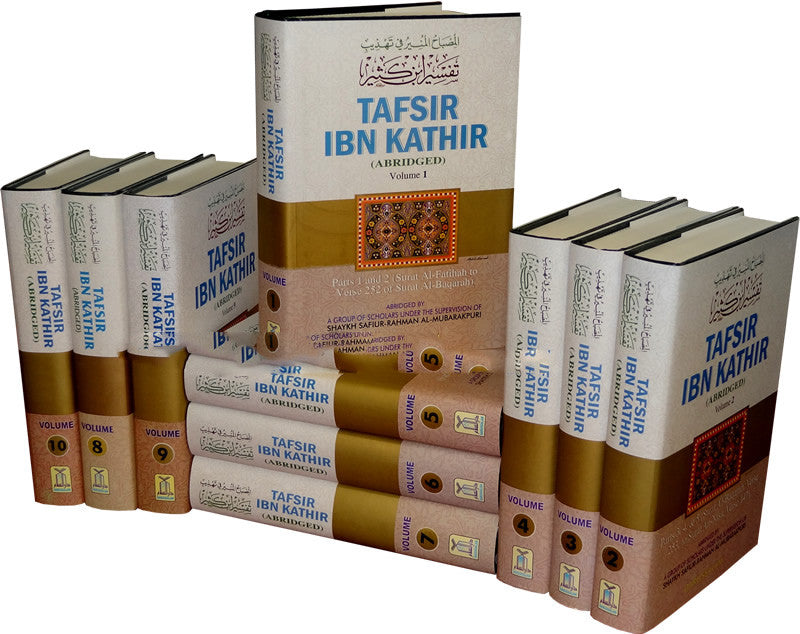
Explore Tafsir Ibn Kathir at HilalPlaza.
References