

A Guide to Reading Sahih Muslim
Al-Minhaj Sharh Sahih Muslim ibn al-Hajjaj, commonly called al-Nawawi’s Commentary on Sahih Muslim, is a standard Sunni resource for understanding one of Islam’s most important hadith collections. Its author, Yahya ibn Sharaf al-Nawawi, explains the reports while connecting them with language, legal reasoning, and the judgments of earlier scholars.
The commentary helps readers move beyond the translated surface of a narration. A difficult word may need explanation; several reports may need to be read together; a legal conclusion may depend on qualifications found elsewhere. Al-Nawawi gives sustained attention to these matters rather than treating the text as a sequence of self-contained sayings. [1]
His Shafi‘i background shapes many legal discussions, but the work also records other scholarly positions. Identifying that background helps us understand his reasoning. It should not lead us to overlook the wider body of hadith explanation preserved in the commentary or to assume that every issue is presented without disagreement.
Transmission Is Part of the Explanation
Al-Nawawi’s treatment of Muslim’s introduction is particularly instructive. Muslim discusses why reports and narrators require examination; the commentary explains the religious responsibility involved in that work. A narration can influence belief, worship, or conduct, so careless transmission can have consequences far beyond an ordinary factual error. [1]
In the discussion of chains of transmission, al-Nawawi explains why identifying a narrator’s genuine weakness is not simply the prohibited backbiting of everyday life. When undertaken properly to protect religious reporting, critical evaluation serves a necessary purpose. This distinction connects scholarly ethics with the preservation of the Sunnah. [2]
The reader also encounters the relationship between different levels of reliability. A person may be truthful yet less accurate in transmission than another. Precision requires more than a favorable impression of someone’s character. Such discussions reveal why hadith criticism became a specialized discipline with its own vocabulary and methods.
What This Adds to Our Study
For readers today, the commentary offers help with both understanding and restraint. It can explain a report that appears difficult, but it can also show why a quick conclusion would be premature. The existence of an authentic narration does not remove the need to understand its wording, context, and relationship to other evidence.
One practical method is to study a short group of related reports with al-Nawawi’s explanation alongside them. First identify the main subject. Then note unfamiliar expressions, competing interpretations, and the conclusion he favors. Keeping those elements separate prevents the commentary from becoming a blur of technical information.
We should likewise distinguish between Imam Muslim’s original collection and later explanatory material. A modern edition can place detailed chapter headings, translation choices, and editorial notes around the text. Those additions may be useful, but accurate reading requires knowing whose voice we are encountering.
Al-Nawawi’s legal and theological explanations should be represented fairly rather than recast as agreement on every detail among all Sunni scholars. The commentary’s authority rests on its depth and lasting contribution, not on the idea that scholarly examination ended with its composition.
Al-Minhaj matters because it makes a central hadith collection more intelligible without separating understanding from responsibility. It teaches us to appreciate the Sunnah through careful explanation and to recognize that speaking confidently about religion requires more than recognizing a familiar sentence.
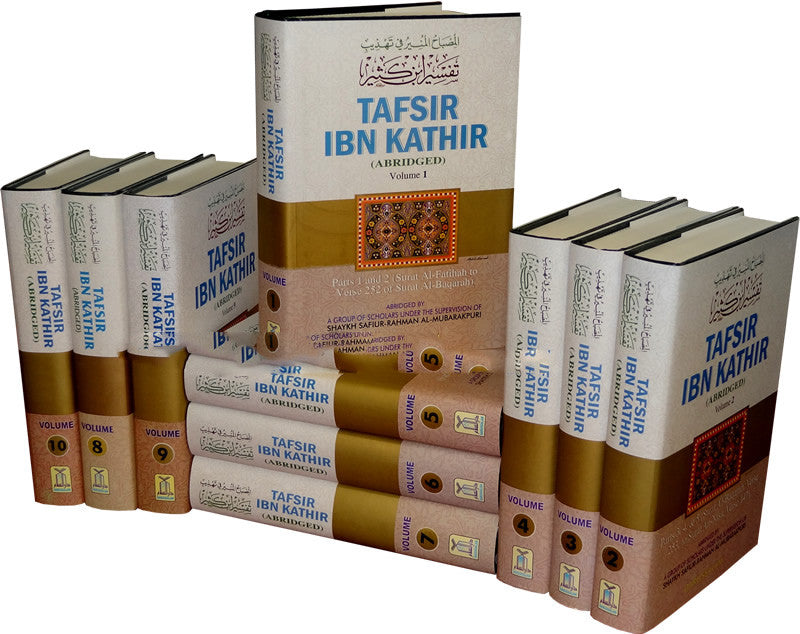
Explore Tafsir Ibn Kathir at HilalPlaza.
References